
Big Walk Guides: Walkthroughs & Puzzle Solutions
Big Walk guides work best as targeted help rather than a blind list of answers. The supplied walkthrough research identifies puzzles in the opening area and around the Red, Green, Blue, Yellow, and Black towers, while focused pages cover multiplayer, platforms, microphone, map, and coordinate mechanics. Start with your group’s clue, then use only the smallest amount of help needed to resume cooperative discovery.
- Published Guides
- 9
- Guide Groups
- 3
- Spoiler-Light Index
- 1
Quick answer
Use big walk puzzle solutions as targeted help for the specific clue your group has reached. The supplied walkthrough research lists an opening area and puzzle sections connected with the Red, Green, Blue, Yellow, and Black towers, while separate sources explain microphone, map, and coordinate mechanics. Read the focused section that matches the object or place in front of you rather than spoiling unrelated areas.
Big Walk is described in the supplied research as a cooperative game where communication is part of the puzzle. Start by having players explain what each person can see, hear, or interact with before opening a walkthrough. If the available research does not prove a solution, mark it To be confirmed instead of turning a guess into an instruction.
Choose your next guide
Use this directory to match the question in front of your group to the narrowest published page. The start-here cards cover session setup and platform choices, the puzzle cards handle documented mechanics, and the research cards record what the supplied sources actually support.
Start Here
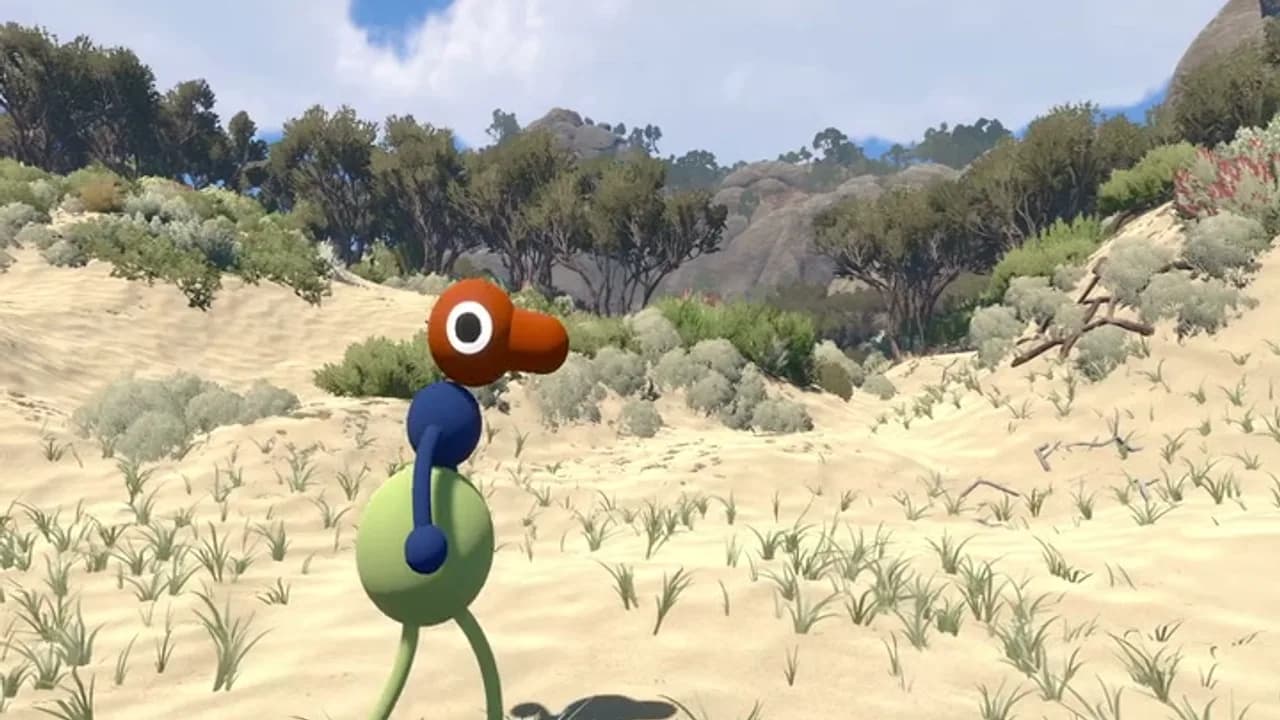 You are hereBig Walk Guide HubChoose the smallest relevant guide and return to your group’s own observations.Read guide
 Play togetherMultiplayer & CrossplayCheck friend lists, Join Codes, host saves, and cross-platform session behavior.Read guide
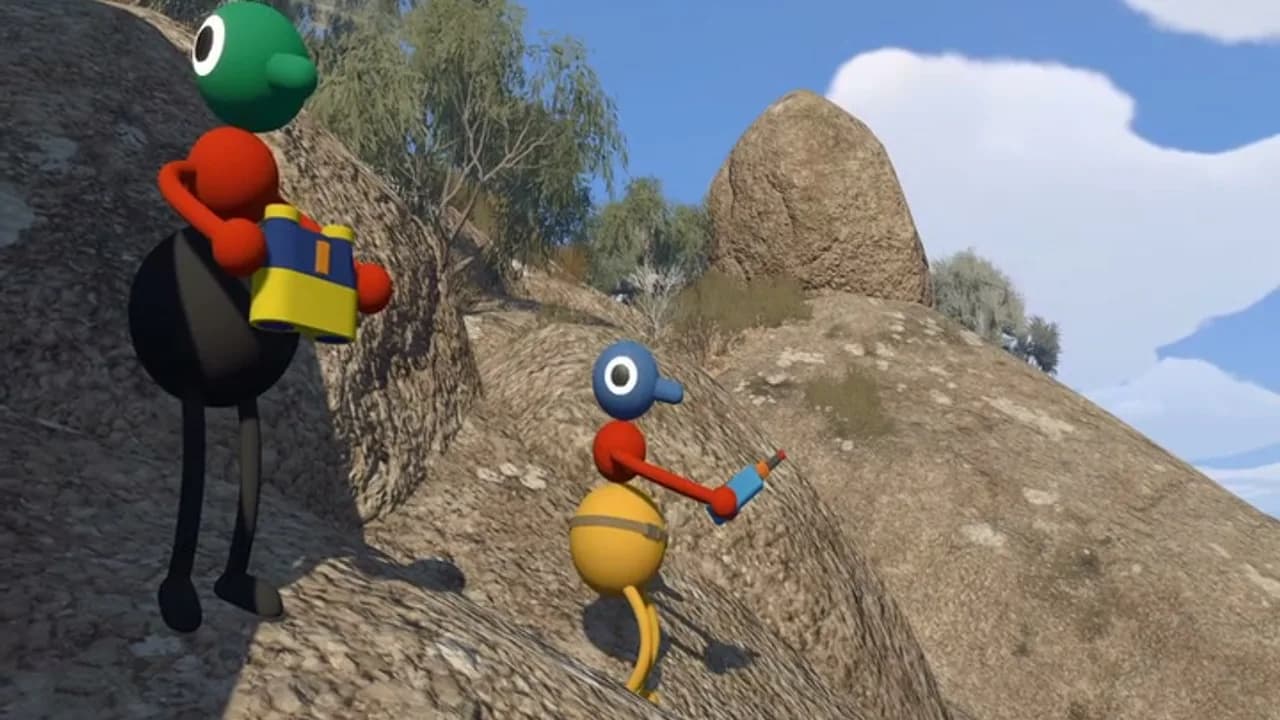 AvailabilityConfirmed PlatformsReview Windows, macOS, PlayStation 5, and Nintendo Switch 2 support before your group buys.Read guide
Puzzle Guides
 Coordinates4166 PuzzleFollow the documented 4166, 1899 coordinate solution and its two-player roles.Read guide
- MechanicCoordinates PuzzleLearn how numbered clues become map destinations instead of passwords.Read guide
- NavigationMap GuideTrace the documented Red Tower route to the large map and the carryable map.Read guide
- AudioMicrophone PuzzleUse the chair, headphones, speakers, and balanced-sound listening method.Read guide
Research & Updates
Use a guide index
The supplied Destructoid walkthrough calls itself a work in progress and groups material by broad regions and puzzle names. That makes it useful as an index of where help exists, not as a complete official catalogue. Use its section labels to choose the smallest relevant guide rather than assuming the list covers every puzzle in the game.
An index also helps a group preserve the discovery that the game’s design encourages. Decide whether you need a location hint, an explanation of a mechanic, or the final interaction sequence. A location hint may be enough when the team understands the puzzle but cannot find its starting point, while a full solution should be the last step.
Work as a group
The supplied materials consistently describe cooperative problem solving, often with more than one player doing different jobs. Before searching for an answer, let each teammate report objects, sounds, text, or distant signals from their own position. Naming those observations together can reveal a relationship that one player alone would miss.
Choose one person to read any guide aloud and another to operate the puzzle if the group decides to use outside help. That prevents everyone from reading separate spoilers or trying conflicting inputs. The research does not establish a mandatory team size for every listed puzzle, so use the group requirements stated by a focused source where one exists.
Opening area
The supplied walkthrough says it covers solutions in the opening area before its tower sections. The review research also describes an early playground-like place with controls shown on posters, structures to climb, and switches to test. That supports treating the start as a place to learn through observation rather than expecting a traditional objective list.
Try the visible controls, watch what changes, and discuss shadows, sounds, or distant effects before looking up an answer. The raw research does not provide a complete opening-area puzzle order in the excerpt supplied here. Therefore, individual opening solutions are To be confirmed unless they appear in one of the linked research sources.
Tower areas
The supplied walkthrough separates material for the Red, Green, Blue, Yellow, and Black towers. It also names examples including a drawbridge, Blue Room, Green Structure, Mechanical Arm, Cave, Green Room, and Yellow Maze. Those labels are useful search anchors, but they do not prove that the article has a complete, current solution for every named section.
Use a tower color and the clearest visible landmark to narrow your search. Do not assume a puzzle belongs to a tower merely because it is near that tower; focused guides sometimes use other landmarks such as a radio station, a beach box, or a map room. If two sources conflict on a location or prerequisite, pause and treat the point as To be confirmed.
Focused puzzle guides
The microphone guide describes a chair, headphones, six stands, one speaker at a time, and a listener waiting for balanced sound in both ears. The map guide describes the Red Tower route and a portable map in the map room. The coordinates research describes interpreting 4166, 1899 as a destination and coordinating a player at a distant button with another at the original box.
These focused pages are more reliable for their narrow mechanics than a broad index is for every area. Use the microphone page when your group sees the audio setup, the map page before a coordinate journey, and the 4166 page for that specific documented pair. Do not copy a solution from one object to another just because both use a button, tower, or colored item.
Avoid accidental spoilers
Ask the group what kind of hint it wants before reading a full walkthrough. A spoiler-light approach is to read only a heading, location clue, or the first sentence of a relevant section, then return to the game. This keeps the team’s own communication and experimentation central to the experience described by the sources.
If someone has already read the full solution, they can translate it into a smaller hint rather than repeating the answer verbatim. For example, they might direct attention to a sound, landmark, or team role without naming the final action. That approach is a practical recommendation, not a fact claimed by the supplied publisher materials.
When a solution is uncertain
The supplied walkthrough itself labels its coverage a work in progress. That is a useful warning against presenting every search result, video transcript, or comment as verified instructions. When the research lacks a confirmed sequence, state To be confirmed and return to the group’s observations or an official update.
Avoid inventing character names, reward values, redemption codes, or exact puzzle counts to make a page look complete. Those facts are not required to help a group decide what to try next. A reliable guide can clearly separate what the source supports from what still needs a current, direct confirmation.
Guide hub FAQ
How should our group use this guide index?
Name the object, tower colour, sound, or situation that caused the question first. Then open the focused page that matches that clue and stop reading as soon as the group has enough information to return to the game.
Which guide should we open first?
Open the multiplayer page when the question is about joining or continuing a session, the platform page before buying, and the relevant puzzle page when a visible object or clue is blocking progress. Use this hub when the group needs help choosing between those options.
Source notes
This guide index is an original organization of the supplied broad walkthrough and focused puzzle research. It preserves the named regions and mechanics where the source supports them, but does not copy articles, ads, subscriber prompts, or transcript filler. It intentionally links to focused pages without claiming coverage that the supplied research does not prove.
A focused index also gives the group a way to return to its own observations after checking a guide. Record the tower color, nearby landmark, and the object that created the question, then stop reading once that clue makes sense. That keeps an answer page from replacing the cooperative discovery the supplied review describes.